Monument Signs in Richmond, Virginia
A monument sign sits at ground level, usually near the road, and is often the first sign drivers see. Because it involves masonry, setbacks, utilities and permitting, it takes more coordination than a wall sign — and more up-front thinking.
Todd Friedman is the local customer point of contact for Richmond-area properties planning, permitting and installing new monument signs, refurbishing existing ones, and updating tenant panels — coordinating the work through the Superior Signs team.
New monument signs
A new monument sign starts with location — where can the sign legally sit given setbacks, easements, and utility lines. From there: design, engineering, permitting, foundation, masonry, cabinet or letters, and electrical.
The goal is a sign that reads clearly from the road, complies with local code, and doesn't sit awkwardly on the property.
Refacing and refurbishing existing monuments
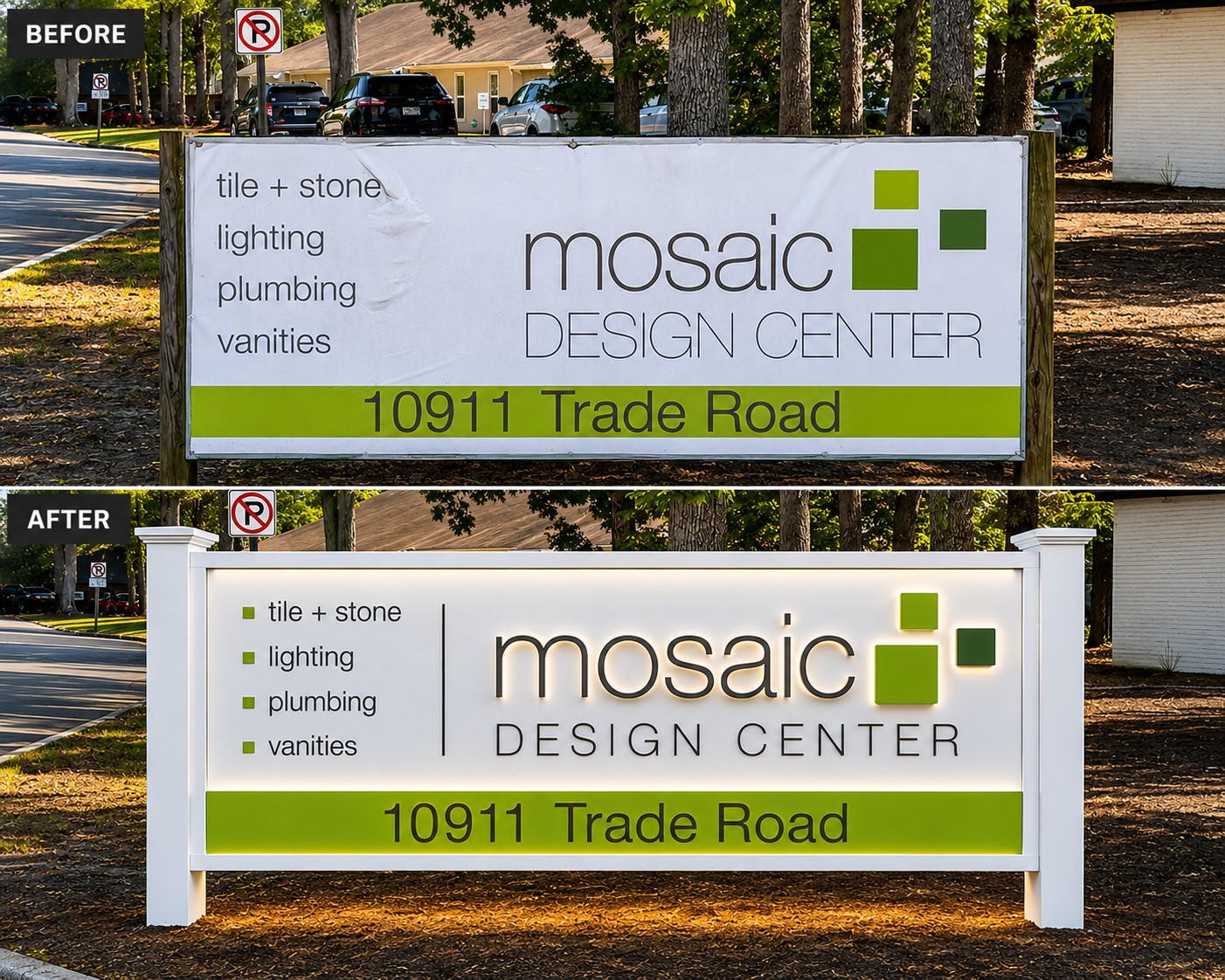
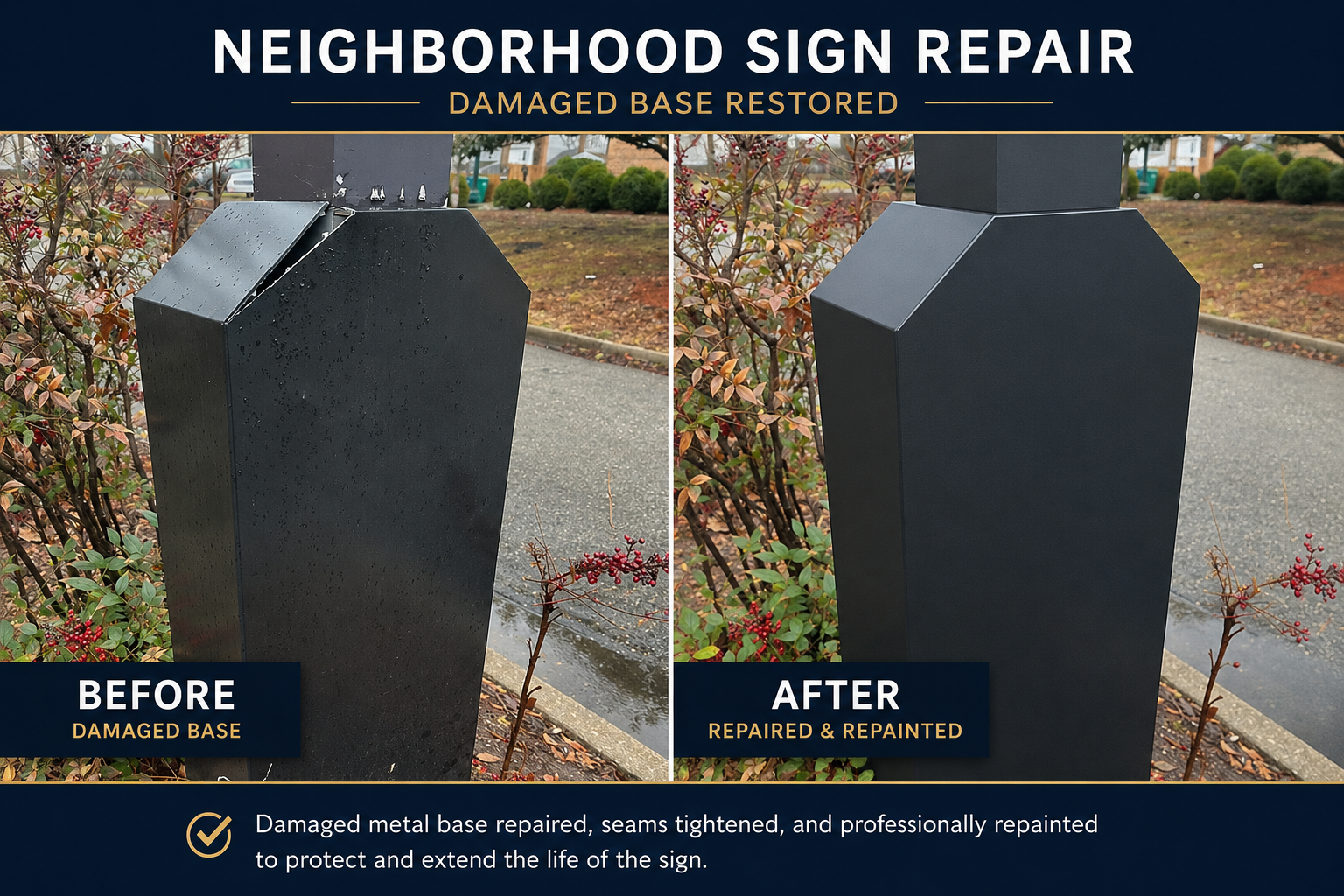
An older monument can often be updated instead of replaced. Common approaches include refacing the cabinet, replacing faded LEDs, cleaning and repainting the masonry, and updating tenant panels for a multi-tenant sign.
Refurbishing is usually faster, less expensive, and easier to permit than a full replacement.
Tenant panels
Multi-tenant monuments use interchangeable panels for each business. Todd coordinates individual tenant-panel updates with the Superior Signs team as tenants change — matching the existing color, size and mounting style so the panel fits cleanly into the existing cabinet.
Electronic message centers (EMC)
An EMC is a digital display integrated into a monument sign. They give you flexibility (dayparting, messages, event promotion) but come with their own set of rules — many jurisdictions restrict brightness, message-change frequency, and animation.
Todd looks into whether an EMC is allowed at your property before drawings begin.
Property lines, setbacks and utilities
- Setback distance from the road, sidewalk and property line
- Underground utility locates before any excavation
- Easements — power, gas, water, telecommunications
- Line of sight for traffic — the sign can't block a driver's view of a driveway or intersection
- Landlord and management-company approval, when applicable
Masonry and structural considerations
Monument signs need a foundation sized for the sign, the wind load and the soil conditions. Larger monuments often require engineered drawings.
Masonry (brick, stone, stucco) is usually the visible base. It's chosen to match the property's architecture and to hold up in the local climate.
Permitting
Monument permits typically involve a scaled site plan, elevation drawings, structural engineering, and — for lit signs — an electrical plan. Todd coordinates the application with the Superior Signs team and works with the jurisdiction until it's approved.
Cost factors
- Overall size and structural design
- Masonry materials
- Number of tenant panels
- Illumination (internal, halo, or external)
- Electronic message center, if included
- Foundation and site work
- Engineering and permit fees
Frequently asked questions
Can we replace an old monument with a new one on the same footprint?
Sometimes yes, sometimes not. Existing structures are often grandfathered to old codes; a replacement may trigger current setback or size rules. Todd looks into this before drawings begin.
How long does a monument-sign project take?
Most projects run several weeks to several months depending on permitting, engineering, weather, and how quickly the landlord and utilities respond. Todd gives you a realistic timeline up front.
Are electronic message centers allowed everywhere?
No. Many Richmond-area jurisdictions restrict EMCs, especially near residential zones. Todd looks into allowability early to avoid a permit denial.
A few relevant projects.

Ready to plan a monument sign?
Send Todd a note or give him a call. He usually responds within one business day.